Advocate

Farmer stories needed!

A tax credit for farm businesses who donate food or crops to hunger relief organizations has been proposed in a supplemental budget filed by the Governor, and in bills filed by Rep. Hannah Kane and Senator Jo Comerford. We need to hear from farmers about how this policy would affect your work! Please fill out this survey by February 27. Hunger relief organizations are also welcome to respond.

Join us for a briefing for advocates on fiscal year 2027 budget food system priorities!

Join the Collaborative and our statewide partners on February 25th at 10am for a virtual briefing on the fiscal year 2027 budget, the many food system programs that are funded in the budget, and how you can get involved in advocacy! Please register for the zoom link here.

Collaborate

Thank you! End of year report and survey

Thank you to those who filled out our end of the year survey on the Collaborative’s work. We hear you! We appreciate the feedback on our network and campaign meetings, the use of our listserv, the benefits of being part of our work, and suggestions for moving forward in 2026.

We did so much together in 2025. Thank you to everyone who helped us to advocate for an equitable, sustainable and resilient food system. View the annual report on our website here.

Website update

The Collaborative has been working on a new website. All the information you have grown to trust is still there, and additional new information. We hope you like the reorganization and the updates! You can visit our website here.

State Legislative update

As of January 20th, Natalie Blais left the legislature. We are excited to continue to work with Natalie in her role at UMass Amherst, and are happy that she can spend more time with her family.

Natalie was the House Chair of the Joint Committee on Agriculture and Fisheries in the 2025-26 session, and a champion for farmers. She is the lead sponsor of three Collaborative priority bills; the ag equity commission, FARM omnibus bill, and the constitutional amendment, in partnership with Representative Kane. Natalie’s hard work in 2023 resulted in the state dedicating $20 million to freeze, frost and flood relief for farmers, and to the establishment and capitalization of a permanent natural disaster relief fund. She fought for increased funding for food system programs and the MDAR administrative budget, and raised the profile of the local food system in the House. We will miss her and wish her all the best!

The Governor’s fiscal year 2027 budget proposal was released on January 28th. Known as House Bill 2, it included $29.7 million for the Healthy Incentives Program, an increase to MEFAP and full funding for the universal school meals program. The budget did not include increases to DTA capacity, and included a cut to MDAR’s administrative budget. The legislature’s Joint Ways and Means Committee will hold a series of hearings on the Governor’s budget proposal, and the House will debate the budget in April. Now is an important time to reach out to your state representative to tell them about your budget priorities!

The Governor also introduced a supplemental budget that includes a tax credit for farm businesses that donate crops and food to hunger relief organizations. As proposed, this is capped at $5,000 per farmer, $5.5 million overall for FY27, and would sunset after three years. This also does not include fishermen. The full funding of HIP, and the inclusion of this tax credit, are thanks to the advocates who showed up to share their thoughts at the Governor’s Anti-Hunger Task Force listening sessions – these two policies came up at almost every session, according to the Chairs. The final recommendations from the Task Force should be released this month.

A note on the fishing vessel Lily Jean

On Friday January 30th, the fishing vessel Lily Jean, based in Gloucester, was lost at sea with six crew members and a NOAA observer on board. The Coast Guard led an extensive search effort covering more than 1,000 square miles over the weekend, and subsequent recovery efforts were called off. We were deeply saddened to hear of this tragedy, and are reminded of the risks and hard work it takes to harvest seafood. A fund to support the families of the seven crew members has been set up by the Gloucester Fishing Community Preservation Fund and hosted by Cape Ann Savings Bank here.

Network updates

The Campaign for HIP Funding is encouraging HIP supporters to reach out to their state representative to ask them to support $29.7 million for HIP in the fiscal year 2027 budget! Please let Becca know which offices you reach out to. The annual HIP Lobby Day at the State House will be on March 26th, in room 428! Please RSVP here – we need as many HIP supporters to attend as possible. The Campaign will meet next on March 4 at 10am via zoom.

The Campaign for Food Literacy – We are excited to welcome nine steering committee members who will help guide the direction and advance the goals of the campaign by providing insights from grassroots food education work. The coalition met on February 3 to discuss 2026 campaign activities. Campaign Meetings are scheduled for the first Tuesday at 4pm in alternating months of 2026 (Feb, Apr, June, Aug, Oct, Dec). Register for Campaign for Food Literacy meetings here.

Welcome to our Campaign for Food Literacy Steering Committee Members:

  • Brianna Jackson – Farm to School Manager, Chicopee Public Schools
  • Cady Molloy – Director of School Nutrition, Dartmouth Public Schools
  • Christopher Szkutak – Vice President, Massachusetts Agriculture in the Classroom
  • Hope Guardenier – Founder and Director, School Sprouts Educational Gardens
  • Jynessa Dutka-Gianelli – Extension Assistant Professor, Sustainable Fisheries and Seafood Program, UMass Amherst
  • Laura Smith – Farmer, Lane Gardens and Oakdale Farms
  • Nate Sander – Grow Education Program Manager, Marion Institute
  • Sabrina Pashtan – Farm to School Manager, Boston Public Schools
  • Shoba Reginald – 7th grade science teacher, Belmont Public Schools

The Urban Agriculture Network kicked off our 2026 meetings on January 22. We reviewed upcoming urban agriculture related grant opportunities, events, and workshops. Members also share updates and uplifted priorities and concerns, including rising utility costs. Our next meeting will be Thursday February 26 at 1pm and we plan to discuss volunteer management and civic engagement through urban agriculture. Register for urban agriculture meetings here.

The Local Food Policy Councils network – The state’s local food policy councils met in January and shared updates about their current and priority activities for the year, including continuing food resource sharing, conducting community food assessments, and aligning efforts. The LFPC network will next convene in person for a Local Food Policy Council Summit in February.

The Food Waste Reduction network – The network met in January for small group networking and food waste reduction work updates. Members were thinking about school food waste diversion, residential food scrap collection, new food rescue routes, and more. In March, we will be discussing and providing feedback on the proposed expansion of the state food waste disposal ban.

To sign up for the listserv for any of these networks to receive further updates, please request to join at the following links or reach out to Emily Fidanza.

The Agricultural Equity Network – Thank you Norris Guscott for all of your work throughout the years! The Collaborative is working on scheduling listening sessions with farmers across the state. More information will be shared soon.

The Agricultural Advocacy Coalition will meet next on February 19 at 11am to discuss advocating for the agricultural priorities in the environmental bond bill, the FARM omnibus bill, and the capital budget. Please email Becca for meeting information.

NEFNE Local Food Count

The New England Local Food Count measures local food consumption in Massachusetts (and New England!). An estimated 90% of the food we eat is imported from outside the region. This puts Massachusetts in a vulnerable position, reliant on distant food producers and suppliers to feed our residents.

Massachusetts’ food security goals is to strengthen local food production and distribution to be better prepared for future supply chain disruptions and is working towards a goal of 30% regional food consumption by 2030 or “30 by 30”. The 2025 Local Food Count survey is now open through April 30th. It is a brief survey that will ask for local food purchases and aggregate sales. All responses are anonymous and aggregated by the research team. MDAR and other government entities will not have access to individual responses.

Please email Kristina Pechulis with any questions.

Celebrate

Revival Road Farm looks to grow

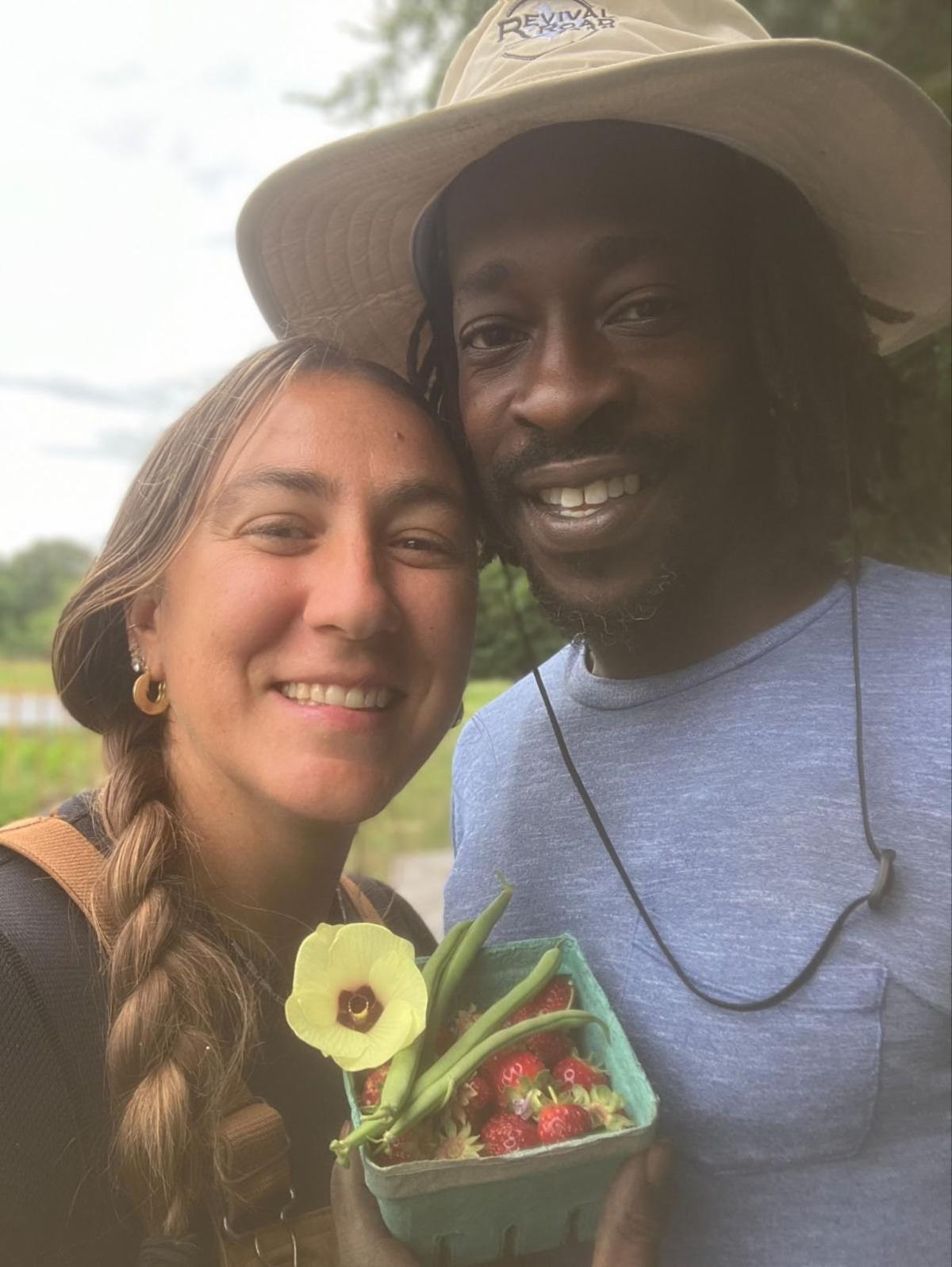
Revival Road Farm, owned by Anna Pierce-Slive and Seidric White, is a diversified, regenerative, reparative agricultural enterprise that strives to re-awaken soil health, connection of people with earth and revive joy and celebration on the land. Revival Road Farm leases land in Beverly MA from New Entry Sustainable Farming Project and grows a hyper-diversified mix of vegetables, cut and edible flowers, culinary and medicinal herbs. RRF works with restaurants and small grocers in the Boston area and beyond and has a CSA with pick ups in Boston and Cambridge. Revival Road Farm hosts educational events, wellness retreats, cocktail hours and farm to table dinners and loves to help people build more intimacy with the land! Learn more about us at www.revivalroadfarm.org. Anna and Seidric were also recently featured in Edible Boston.

Interested in being featured in our monthly newsletter? Please fill out this form!

Discover

Twin Cities food system organizations feed neighbors and advocate for justice

Civil Eats has put together a list of food security and food justice organizations that are mobilizing to feed families sheltering in place as the Twin Cities are under siege by ICE. Read more and donate here. Additionally, renowned Indigenous chef Sean Sherman is circulating a letter demanding accountability and policy changes, and asking food businesses and food system allies to sign on ahead of a Congressional vote on DHS funding on February 13th. View and sign the letter here.

Share It