The Massachusetts Legislature's formal session came to an end on July 31, 2026 for the 2025-26 legislative session. The Collaborative and out networks have come together to advocate for policies and investments that support a sustainable, equitable, resilient and connected local food system. Together, we won: A refundable, up to $5,000 tax credit for [...]
Categories
Featured posts
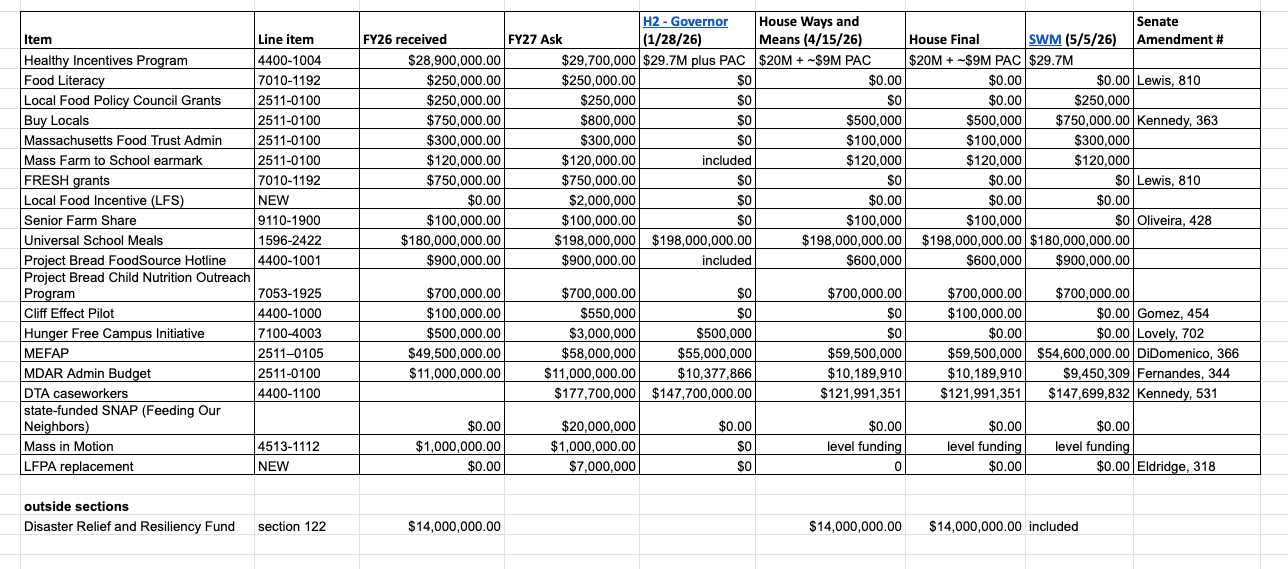
Fiscal Year 2027 Senate Budget debate recap
On May 5, 2026, the Massachusetts Senate Ways and Means Committee released its fiscal year 2027 budget proposal. State Senators introduced 1158 amendments to the proposal for new policy proposals and increased funding for various state agencies and programs. Over four days of debate, the amendments were packaged into consolidated amendments based on topic, and passed. Many amendments supporting the local food system were proposed, including:
- $1 million for FRESH grants and food literacy by Senator Lewis, which was adopted
- $200,000 increase to MDAR’s administrative budget by Senator Fernandes, which was not adopted
- $ 7 million for a new, state-funded LFPA program by Senator Eldridge, which was not adopted
- $7 million increase to DTA’s caseworker line item by Senator Robyn Kennedy, which was not adopted
Senate Ways and Means proposed $29.7M in new funding for the Healthy Incentives Program, level to the Governor’s proposal of $29.7M in H.2, and $250,000 for another round of the local food policy council grant program. The Collaborative thanks the Senate for their leadership, especially SWM Chair Rodrigues and Vice-Chair Comerford for mentioning HIP once again in their remarks to open debate. Please thank Senate leadership, and your own state senator, for voting for full funding for the above programs! The conference committee has been appointed as of May 28, 2026, and will spend June hashing out the differences between the House and Senate proposals, for a final version that will be sent to the Governor’s desk by July 1. A call to action for the conference committee can be found here.
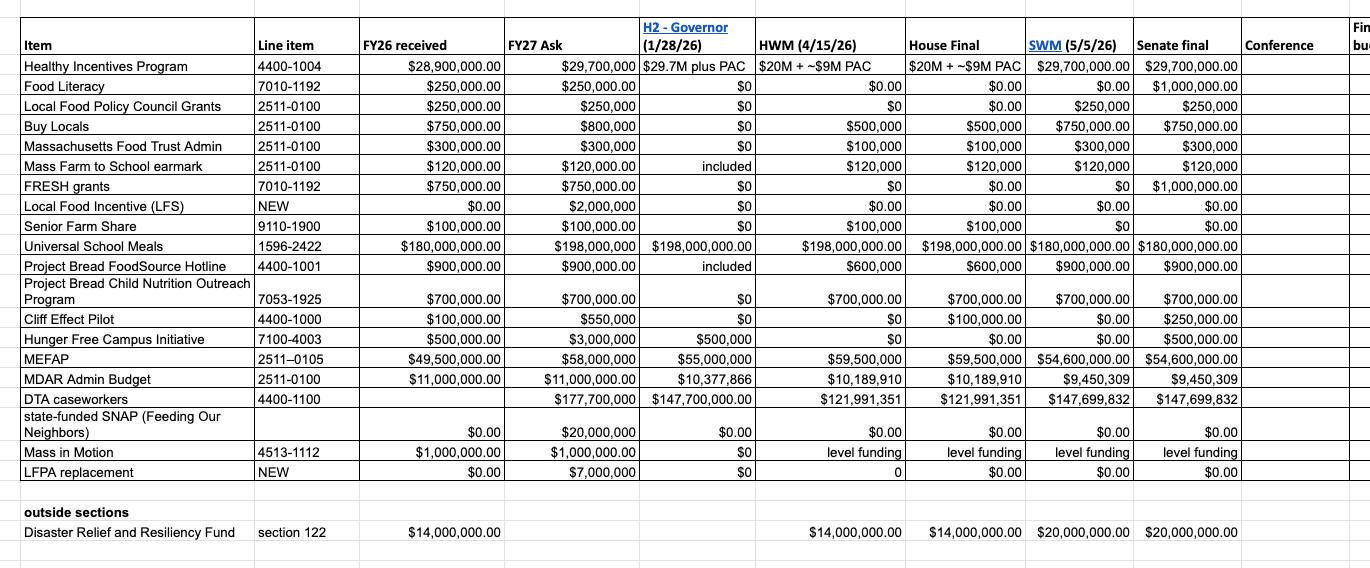
See our updated budget table below.
Contact your State Senator: Support food system amendments in the Fiscal Year 2027 budget!
On Tuesday, May 5, 2026 the Senate Committee on Ways and Means released its fiscal year 2027 budget proposal. The budget includes a number of important food system programs; $180 million for universal school meals, $29.7 million for the Healthy Incentives Program, $60 million for MEFAP, $250,000 for another round of local food policy council grants, and more. We appreciate Senate leadership’s support for HIP and the local food system. The proposal also contains proposed cuts to the MDAR and DTA agency budgets, which we are concerned about.
Dozens of the filed amendments relate to Massachusetts’ food system, proposing investments in local programs and projects, as well as in statewide efforts. The Collaborative has prioritized four amendments. Please use this template to reach out to your Senator and ask them to cosponsor the below amendments.
#810. Food Literacy, $1,000,000, Senator Lewis. This funding will allow DESE to make another round of FRESH grants, continue to support district wellness coaching, and develop a Harvest of the Month curriculum resource.
#344. Mass. Department of Agricultural Resources budget, $10,377,866, Senator Fernandes. This amendment will increase the MDAR agency allocation by $207,000. The agency has seen increasing responsibilities in the last few years, including the implementation of the Farmland Action Plan and the establishment of the Food Security Division.
#318. Local Food Purchasing Assistance Program, $7,000,000. Senator Eldridge. This amendment will establish a state-funded LFPA. This program was federally funded and cut by the federal Administration in spring 2025. State support would continue the momentum from this program, especially important in a time when food insecurity is rising.
#531. DTA Caseworker funding, $147,699,832, Senator Kennedy. This amendment will raise the amount in the DTA caseworker line item by $7 million above level funding, so DTA can hire 60 additional caseworkers. SNAP recipients need to reach DTA staff so they can continue to receive SNAP. Without SNAP, folks lose access to HIP!
These four amendments total $15.2 million and represent 0.02% of the Senate’s proposed $63.3 billion budget.
May 2026 Newsletter
Advocate
Prepare to contact senators about food system budget priorities!
An action alert for the Senate budget debate will be sent separately early next week.
The Massachusetts FARM Bill is still in play – please use this toolkit to reach out to your state representative to ask them to support the state FARM bill! Now that the budget process is done in the House we need to push to get this bill over the finish line.
Collaborate
Save the date for the 10th annual Massachusetts Food System Forum Please save November 19, 2026 for the tenth annual Forum! This year’s Forum will once again be held at the College of the Holy Cross in Worcester, and will focus on policy advocacy as we head into a new legislative session. Thoughts on the Forum? Interested in sponsorship? Email Kristina.

State Legislative update
The fiscal year 2027 House Ways and Means (HWM) budget proposal was released on April 15. House members introduced more than 1700 amendments to the HWM budget proposal requesting further funding of various programs and state agencies, and new policy proposals. Legislators proposed many amendments supporting the local food system, including; an amendment for another round of local Food Policy Council grants by Rep. Sabadosa, funding for FRESH grants and food literacy by Rep. Duffy, an increase to MDAR’s administrative budget by Rep. Saunders, funding for a state-funded LFPA program by Rep. Sabadosa, and funding for an increase to the Department of Transitional Assistance’s caseworker line item by Rep. LeBoeuf. Unfortunately, none of these amendments were adopted by the House. An amendment to establish a school meals nutrition standards advisory council, introduced by Rep. Vargas, was adopted. You can see the full table of food system amendments, and how they fared, here.
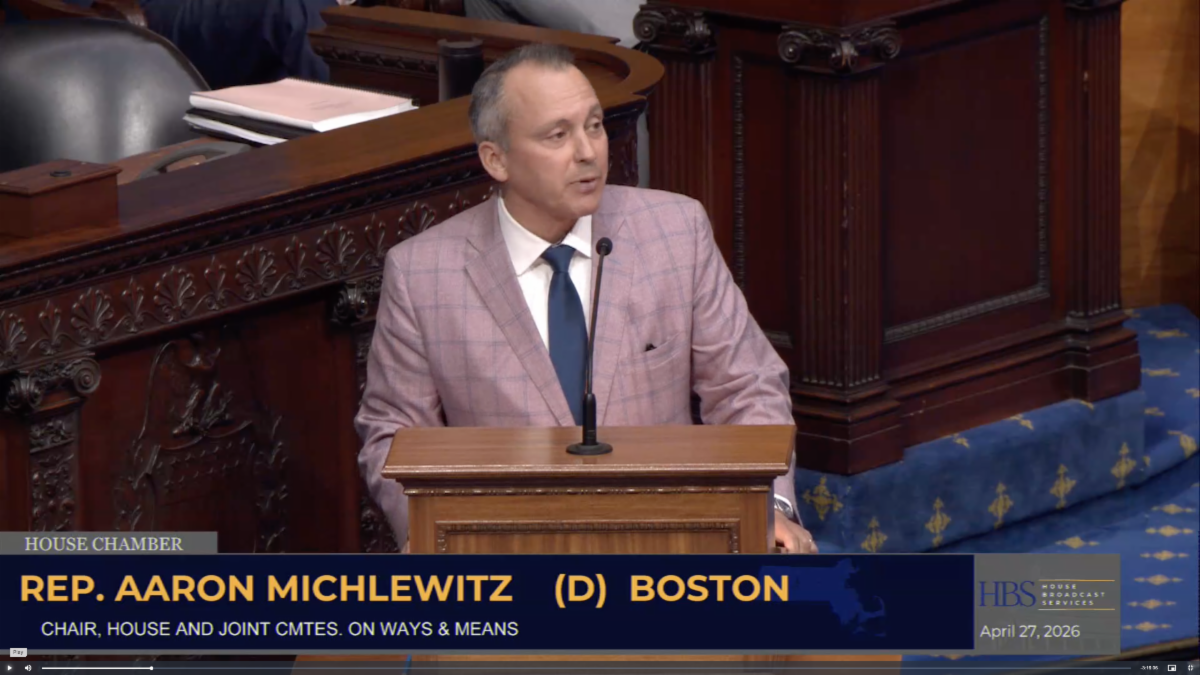
Please thank House leadership, and your own state representative, for voting for full funding for HIP! We especially appreciate HWM Chair Aaron Michlewitz for once again shouting out HIP on the House floor during his opening remarks.
The Senate Ways and Means fiscal year 2027 budget proposal is expected to be released on May 5, with debate starting potentially on May 18. We are working to ensure the above programs are funded in the Senate, and ask that partners reach out to their own state Senator to encourage them to support food system programs in the fiscal year 2027 budget.
The Governor’s Anti-Hunger Task Force report was released on April 17. The report includes a number of recommendations related to the local food system under the Rural Resiliency section, such as a farmer tax credit, increased state purchasing of local food, codifying FSIG, and expanding MDAR’s land licensing program. We thank Co-Chairs Commissioner Ashley Randle, Allison Bovell-Ammon, and Alana Davidson for their hard work, as well as our partners who contributed to the public hearings and meetings that formed this report. The Task Force is working on implementation and we encourage our partners to stay involved to ensure that we work towards the recommendations listed in the report. Federal update The federal Farm Bill passed the U.S. House on April 30 by a 224-200 vote, with 14 Democrats voting in favor and 3 Republicans voting against. MAFSC, along with more than 300 farm and food organizations, signed on to this letterto U.S. House leadership led by the National Sustainable Agriculture Coalition, National Young Farmers Coalition, Rural Coalition and more. This proposal, if passed, will not increase support for Massachusetts farmers nor families who need Congress to reverse last year’s cuts to SNAP. You can read the full bill here. The Farm Bill will be taken up by the U.S. Senate next, where it has an unclear path to passage.
Network updates The Campaign for HIP Funding will meet next on May 6 at 9am on zoom, to recap the House FY27 budget debate and prepare for the Senate debate. Please note the new time to accommodate DTA’s SNAP CSA pilot meeting at 10am that morning. Please reach out to Becca for the zoom information.
The Campaign for Food Literacy coalition met in April. We reviewed the current status of our budget and legislative priorities. We also explored opportunities for building awareness of the importance of food literacy with both state and local or district administrators. The next Campaign meeting is June 2 at 4pm.
The Urban Agriculture Network met last week for networking and connection and discussion about top urban agriculture priorities and the skills and resources network members have to offer or are seeking to strengthen through this community. We considered how network building can best serve to strengthen urban agriculture work in Massachusetts through connection, collaboration, and advocacy.
The Local Food Policy Councils Network met earlier in April. Councils shared updates about what they have been working on including a Food Access Summit (Metro West), Aquaculture Policy Coalition (Southcoast), Food Rescue Community Advisory Council (Cape Cod), a “Future of Food” exhibit (Salem), re-engaging a local food policy council (Malden), opening urban farming and community gardening sites (Springfield), organizing in support of SNAP and DTA (Boston, Worcester, Metro West, Springfield), and hosting a community fundraising dinner (Quaboag Valley). Councils also shared ideas with each other around identifying priorities, developing actionable workplans, engaging with funders and other local partners doing complementary work, and more. The network meets again on May 14. The Food Waste Reduction Network will meet next on Tuesday, May 12. We will be discussing the Evolving Landscape of Food Waste Prevention, Reduction, and Management including a panel and open discussion exploring how the world of addressing food waste is shifting. This includes, but is not limited to, new and expanding apps for consumer food recovery to the evolving field of Anaerobic Digestion. How are organizations responding? What are the long-term impacts? And how do we best work together to eliminate both food waste and food insecurity?
To sign up for the listserv for any of these networks to receive further updates, please reach out to Emily Fidanza.
The Agricultural Advocacy Coalition will meet next on May 21 at 11am. We will prepare for the state FARM bill and environmental bond bill debate in the House. If you are, or know farmers that experienced damage to their farm due to the freezing temperatures in late April, please respond to this email. Please reach out to Becca for the zoom information. Celebrate
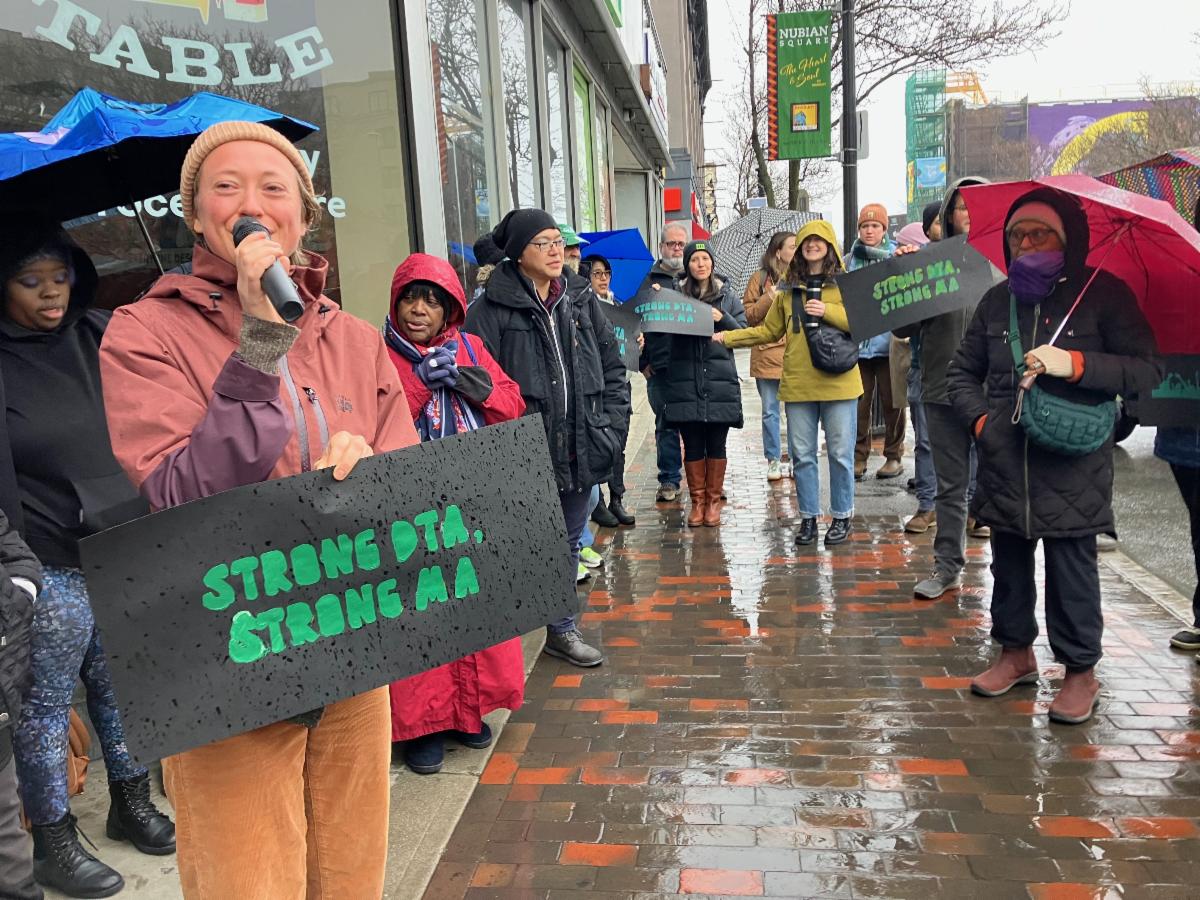
Local Food Policy Councils organize day of action to support DTA On April 7, more than one hundred advocates from across the state participated in a day of action to show support for Department of Transitional Assistance caseworkers and highlight the urgency of state investments to address the SNAP crisis. The effort was initiated by Local Food Policy Councils after a conversation at the Collaborative’s 2026 Local Food Policy Council Summit in February. Council leaders recognized that access to SNAP was a cross cutting issue all of their unique communities were experiencing. They came together to plan coordinated action that would make a powerful statement both locally and statewide, demonstrating that this is an issue people care strongly about from the Berkshires to Boston to Cape Cod. 10+ DTA offices were visited with advocates showing gratitude for DTA caseworkers, and participating in rallies in Boston, Framingham, and Worcester.
Local FPC leaders shared these reflections on their events:
“The rally in Boston was high energy and great turnout (more than 60 attendees) despite truly dismal weather! Folks who show up for their community on a snowy morning in April are the ones who will change the world” -Sutton Kiplinger, Boston Food Access Council
“In Worcester more than 25 advocates and legislators gathered outside of the DTA office. The Center on Food Equity offered baked goods to DTA staff as a thank you for their hard work and brought attention to the critical issue of staffing capacity and its impact on benefit access and hunger in the community. As advocates gathered SNAP recipients entering the office shared some of their frustrations and experiences managing their benefits further elevating the urgent need.” -Casey Burns, Worcester Food Policy Council
The MetroWest Food Collaborative was grateful for the opportunity to show appreciation to the DTA staff who work tirelessly to help families access SNAP, while also highlighting the need for additional staff by rallying with the two Framingham DTA board co-chairs, Rep Arena-DeRosa and the District Director from Senate President Spilka’s office. -Kali Coughlan, Metro West Food Collaborative
Interested in being featured in our monthly newsletter? Please fill out this form! Discover
Students lobby for Hadley grass to become official state vegetable
As reported by WBUR, a group of third grade students at Hadley Elementary School are advocating for asparagus to become the state’s official vegetable, complementing cranberry as the state’s official berry. A bill has been filed by Rep. Homar Gomez and Senator Jo Comerford (H.5088 / S.3073) as a result of the student’s advocacy and the bill is making its way through the legislative process. Join them in advocating or by supporting local asparagus farmers!